
Fast Drama: Mini Series
Gurisunter Co., LTDEntertainment
3.96.00 Reviews
- Version
- 1.0.1
- Installs
- 100.00K
- Age Rating
- Everyone
Screenshots




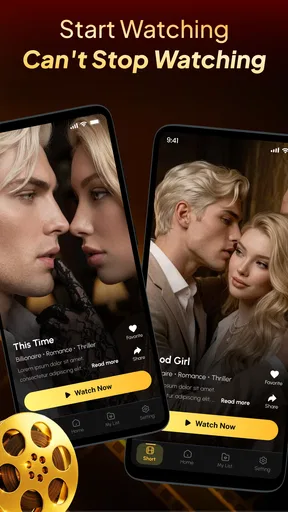
Our Review of Fast Drama: Mini Series
 Analysis by Appyee
I tried Fast Drama: Mini Series as a quick entertainment option for moments when I wanted a complete burst of drama without committing to a long film or a full television season. The app comes from Gurisunter Co., LTD and focuses on short-form stories presented in HD. That simple idea makes it easy to understand: open it when you have a little spare time, choose a mini series, and settle into a sequence of brief episodes.
What makes it worth considering is not that it replaces every streaming service. It does not. Its appeal is narrower and more practical. I found it most useful for short breaks, casual viewing, and shared situations where one person wants something immediately watchable. The free price also lowers the barrier to trying it, although the viewing experience is still better when everyone using a shared device agrees on what kind of drama they want to watch.
How Fast Drama fits into everyday shared viewing
When I think about sharing short-form drama at home, the main benefit is how easily it can fit around different schedules: one person can watch during a break without asking everyone to commit to a full episode of a traditional series. I’d still agree on a stopping point and check that the story suits whoever is nearby. That makes the next question less about the format and more about choosing a routine that works for the household.
A useful choice for short household breaks
The most natural scenario for this app is a household with a phone or tablet that is used by more than one person during the day. Imagine finishing dinner, waiting for an appointment, or taking a short rest while another family member is nearby. A traditional streaming service can work in those moments, but its large catalog often creates a second problem: deciding what to watch takes longer than the break itself.
Fast Drama feels better suited to that kind of gap. Its short dramas and mini series are designed around quick engagement, so I could begin watching without planning an entire evening. If I had only a few minutes, I could still make progress. If I had longer, I could continue through several episodes. That flexibility is one of the app’s strongest practical qualities.
Shared use also changes how I judge an entertainment app. On my own device, I can choose anything that interests me. On a household device, the content has to suit whoever may pick it up next. I would not leave a currently playing story open for a young child simply because the app itself carries an Everyone age rating. The rating is reassuring as a general access signal, but it should not replace a parent’s judgment about individual story themes or the maturity of a particular scene.
For adults or older viewers who enjoy compressed storytelling, the format can be surprisingly convenient. The stories move quickly and avoid the long opening investment required by a conventional series. However, anyone expecting the production scale, extensive character development, or broad selection of a major streaming platform may find the experience more limited.
What I noticed when starting with the app
The store presents the app as a place to watch addictive short dramas and mini series in HD, and that description captures the intended use more accurately than calling it a general video service. I approached it as a focused entertainment tool rather than as a replacement for every other way of watching television. That distinction helped me set realistic expectations from the beginning.
Because the current version is 1.0.1, I treated the experience as an early-stage product rather than a mature platform with years of refinement behind it. The app runs on devices using Android 8.1 or newer, which is helpful for people keeping an older compatible phone in the household. Still, device compatibility is only the first check. A shared device should also have enough battery, a stable connection, and a screen that makes text and subtitles comfortable to read.
I recommend opening the app before handing the device to someone else, especially if the person watching is not familiar with short-form drama. A quick look at the available choices prevents the common household problem of passing over a phone and then spending the entire break searching. It also gives the owner a chance to decide whether the selected material is suitable for the next viewer.
Setting boundaries on a shared phone or tablet
One important limitation is that an entertainment app does not automatically understand the difference between private viewing and family viewing. If several people use the same device, I would establish a simple routine: the person who starts a series should remember where they stopped, avoid changing another viewer’s place without asking, and close the app when handing the device to a child.
That may sound basic, but short episodes make it especially relevant. A viewer can move through a story quickly, and another person may assume the next episode is ready for them when the first viewer has actually jumped ahead. Since I found no reason to treat the app as a household account manager, I would not rely on it to separate everyone’s viewing habits. Shared-device coordination has to come from the people using the device.
A practical workaround is to keep one series for each regular viewer when possible. Instead of everyone sampling the same title at random, each person can remember a separate story. This reduces accidental spoilers and makes it easier to return to the right place. It is a small habit, but it matters more in a short-series app because episodes are so easy to consume in a single sitting.
I would also avoid starting a dramatic episode immediately before the device needs to be passed to someone else. The quick format encourages “just one more episode,” which is convenient for the current viewer but can disrupt a shared schedule. In my experience, the app works best when its speed is treated as a planning advantage rather than an excuse to ignore the next person waiting to use the screen.
Coordinating viewing without overcomplicating it
Fast Drama can support casual group viewing, but it is not the same as a carefully planned family movie night. Its short structure makes it easy for one person to watch ahead, and the emotional rhythm may be more personal than communal. I would use it for a quick shared break when everyone already agrees on the type of story, not as the main centerpiece of a large gathering.
For two people sharing a device, a useful approach is to choose a stopping point before pressing play. For example, you might watch one episode while waiting for food, then stop even if the next episode is tempting. This keeps the app from taking over the evening and makes it easier for the next viewer to continue later. The format is well suited to this kind of self-imposed boundary because the episodes are naturally divided into small units.
Another helpful habit is to discuss the tone before selecting a title. A person looking for romance, suspense, or an emotional cliffhanger may have a very different idea of a good short drama than someone who wants something light. The app’s broad entertainment purpose does not guarantee that every choice will suit every member of a household. A thirty-second conversation can prevent a frustrating viewing session.
Compared with ordinary television, the app gives me more control over when to begin and stop. Compared with a large streaming service, it feels more focused and less intimidating. Compared with social video feeds, it offers a more deliberate story experience instead of an endless stream of unrelated clips. The trade-off is that I would choose a conventional streaming platform when I want a deep catalog, established long-form shows, or a more polished household profile system.
Age context and trust in the home
The Everyone content rating makes Fast Drama easier to consider for a mixed-age household, but I would still use common sense. An age label is a broad guide, not a promise that every scene will match every child’s sensitivity. A parent who knows a child’s preferences should preview or discuss selections when that matters. I would be particularly careful with children who are easily affected by conflict, frightening situations, or intense emotional scenes.
This is also where the app’s entertainment-first design needs a little adult supervision. I would not hand over a shared device and assume the rating alone handles every concern. The safer routine is to choose content together for younger viewers and let older household members browse more independently. That approach does not require complicated rules, only awareness of who is using the screen and what they are likely to encounter.
For adults, the main trust question is different. The app is free, so the decision is less about paying for a subscription and more about whether the viewing experience fits your comfort level with a newer short-drama service. The developer is Gurisunter Co., LTD, and the app has attracted over one hundred thousand installs. Its average rating is 3.9 from around sixty ratings, with six written reviews, which suggests some early interest but not the depth of public feedback I would expect from a long-established platform.
I see that rating as a reason to try the app personally rather than treating it as a final verdict. A score in that range can reflect different expectations: some viewers may enjoy the quick stories, while others may want a larger catalog or smoother service behavior. Since viewing preferences vary so much, a short personal test is more useful than assuming the average experience will match yours.
Small details that improve the experience
My first practical tip is to use the app when you genuinely have a short window, instead of opening it only when you are prepared for a full evening. That matches its strongest quality and prevents comparison with long-form platforms on their own terms. A commute wait, a lunch break, or the few minutes before an appointment can be a better test than a planned movie night.
My second tip is to treat episode progress as something worth remembering in a shared environment. If several people use the same phone, note the title and episode mentally before closing the app. This avoids the awkward situation where someone else continues your story or where you spend the next break trying to reconstruct your place.
My third tip is to keep the screen position and audio situation in mind. Short dramas depend on quick dialogue and visual reactions, so watching in a noisy room or with the display dimmed can make the story harder to follow. For a shared household, headphones may be useful when appropriate, but I would not assume every viewer has the same comfort with them. A tablet placed in a quiet common area may be better for two people watching together.
A fourth trade-off is the temptation created by the compact format. Short episodes feel easy to fit into a schedule, yet a sequence of them can consume much more time than intended. I recommend deciding whether you want one episode or a longer session before starting. That simple choice keeps the app useful for controlled breaks instead of turning every spare moment into unplanned viewing.
Who should choose it, and who should look elsewhere
I would recommend Fast Drama to someone who enjoys quick emotional stories and wants an inexpensive way to fill small gaps in the day. It is also a reasonable option for a household that shares one compatible Android device and wants something easier to start than a large streaming catalog. People who like cliffhangers, compact episodes, and immediate drama are the most likely to appreciate its format.
I would be less likely to recommend it to viewers who need a carefully organized family experience, individual account boundaries, or a deep library of familiar programs. Those users may be happier with a mainstream streaming service that is built around profiles, longer series, and established parental tools. I would also steer away from it for anyone who prefers documentaries, live programming, or slow character-driven stories rather than compressed plots.
iPhone users should pay attention to the platform they intend to use before planning a household setup, while Android users should check that their device meets the minimum operating-system requirement. I would also avoid assuming that every older phone will feel equally comfortable simply because it can run the app. Screen size, battery health, and connection quality can affect short-video viewing just as much as the app itself.
My household verdict
After using Fast Drama: Mini Series, I see it as a focused entertainment app with a clear place in a shared home: quick, accessible drama for viewers who do not want to commit to a long program. Its free availability and Everyone rating make it approachable, and its support for Android 8.1 or newer means it can fit on some older household devices. The early public response, including a 3.9 average, feels encouraging but still modest enough that I would judge it by personal use.
The biggest strength is the way the short format matches real fragments of time. The biggest weakness is that the same speed can create confusion on a shared device and may feel shallow to viewers who want richer long-form storytelling. The app does not remove the need for household coordination, and I would not treat the age label as a substitute for choosing content thoughtfully.
My recommendation is to try it as a compact, free drama option rather than as your only streaming service. If you and the people at home agree on viewing boundaries, remember your episode positions, and choose stories with the audience in mind, it can make short breaks more enjoyable. If your priority is a broad catalog, detailed family separation, or carefully managed profiles, another type of streaming app will be the better fit.
For the right viewer, Fast Drama: Mini Series succeeds by keeping the decision simple: pick a short story, watch for as long as your schedule allows, and stop when the break is over. That is not a complete replacement for traditional television, but it is a useful role—and one the app handles more naturally than services designed for much longer viewing sessions.
Verdict
Strengths of Fast Drama: Mini Series
- Episodes are short, making the app convenient for quick entertainment breaks.
- The catalog offers many dramatic stories across different themes and moods.
- New episodes can provide a steady stream of fresh content.
- The vertical format is comfortable for one-handed mobile viewing.
- Personalized recommendations may help users discover similar mini-series.
Limitations of Fast Drama: Mini Series
- Frequent ads may interrupt episodes, especially for users on the free plan.
- Some content may require coins, subscriptions, or additional in-app purchases.
- Story quality can vary noticeably between different mini-series.
- Video streaming may consume significant mobile data without Wi-Fi.
- Availability of shows and features may differ by region or device.
Similar Picks in This Category
View All
Google Play Games
Google LLC3.9

Netflix
Netflix, Inc.4.8

YouTube Kids
Google LLC4.2

Disney+
Disney4.4

Prime Video
Amazon Mobile LLC4.7

Steam
Valve Corporation3.2
Frequently Asked Questions
What is Fast Drama: Mini Series?
Fast Drama: Mini Series is an entertainment app focused on short-form fictional episodes designed for quick viewing sessions. It usually presents dramatic stories through brief chapters, making it suitable for users who prefer watching content during breaks rather than committing to full-length television episodes. The catalog, genres, episode availability, and presentation may vary depending on the version and region.
Is Fast Drama: Mini Series free to download and use?
The application may be available to download without an upfront fee, but that does not necessarily mean every episode or feature is free. Many short-drama platforms combine free chapters with advertising, in-app purchases, coins, subscriptions, or timed unlocks. Before watching extensively, check the app’s pricing details, payment terms, and whether automatic subscription renewal is enabled.
Does Fast Drama: Mini Series require an internet connection?
An internet connection is generally needed to browse the library, load videos, synchronize viewing progress, and access newly released episodes. Depending on the version of the app, some content may support offline viewing after it has been downloaded, although this is not guaranteed for every title. Users with limited mobile data should review video-quality and download settings before streaming.
Is Fast Drama: Mini Series suitable for children?
Parents should review the app’s age rating and individual series descriptions before allowing children to use it. Short drama platforms can include themes such as romance, conflict, crime, emotional distress, or mature dialogue, and content standards may differ between shows. The app may also contain advertisements, purchases, and social or recommendation features, so parental controls and device purchase restrictions are advisable.
What should I check before downloading Fast Drama: Mini Series?
Before installing Fast Drama: Mini Series, check whether your Android or iOS version is supported, how much storage the application requires, and which permissions it requests. It is also worth reviewing recent user feedback about video quality, advertisements, crashes, customer support, and billing. Finally, confirm the developer’s identity and download the app only from an official store to reduce security and payment risks.
